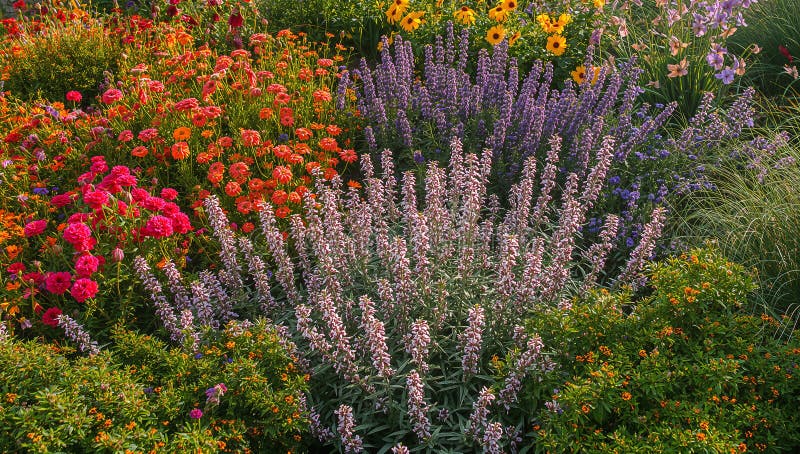
Cultivating a Vibrant Summer Flower Garden
Establishing a successful summer flower garden requires a methodical approach, integrating horticultural science with practical application. This analysis details the critical parameters and comparative strategies essential for achieving robust floral displays from early summer through autumn’s onset.
Site Assessment and Soil Preparation
Optimal site selection is foundational, commencing with a quantitative assessment of solar exposure. Most summer annuals and perennials require 6-8 hours of direct sunlight daily for peak photosynthesis; less than 4 hours reduces vigor and bloom production by 30-50%. Soil preparation is equally critical. A comprehensive soil test provides actionable data on pH and nutrient levels. For most summer flowers, a pH range of 6.0 to 7.0 is optimal; deviations impact nutrient availability. Amending soil based on test results is crucial: elemental sulfur (10-20 lbs/1,000 sq ft) lowers pH by 0.5-1.0 units, while dolomitic lime (25-50 lbs/1,000 sq ft) raises it. Incorporating 2-4 inches of well-composted organic material annually improves soil structure, water retention (increasing by 10-15%), and nutrient holding capacity (CEC typically up 5-10 mEq/100g).

Plant Selection and Layout Optimization
Strategic plant selection is paramount for sustained floral impact and disease resistance. Compare a monoculture, which simplifies maintenance but risks total crop loss, against a polyculture, offering biodiversity for pest deterrence and staggered bloom times. For instance, marigolds (Tagetes spp.) can deter nematodes, reducing root damage by up to 40%. When selecting species, consider mature plant dimensions for optimal density. Underestimating growth (e.g., Zinnia ‘State Fair’ reaching 3 feet high, 1.5 feet wide) leads to overcrowding, competition, and reduced flowering by 30-50% compared to recommended 12-18 inch spacing. Group plants with similar cultural requirements to minimize stress. Research USDA hardiness zone compatibility for perennials to ensure >85% winter survival.
Irrigation and Nutrient Management
Efficient irrigation is fundamental. Drip irrigation or soaker hoses deliver water directly to the root zone, reducing evaporative loss by 25-50% and minimizing fungal diseases like powdery mildew (reduced by 30-45%). Aim for deep, infrequent watering: 1 inch of water penetration per week (0.62 gallons per sq ft). Soil moisture meters indicate when the top 2-4 inches are dry. Nutrient management should be precise. Post-amendment, supplemental fertilization may be needed. A balanced slow-release granular fertilizer (e.g., 10-10-10 or 14-14-14) at 1 lb/100 sq ft every 6-8 weeks ensures consistent nutrient availability. For rapid response, a liquid feed (e.g., 20-20-20) diluted to 1/2 strength every 2-4 weeks is effective. Avoid excessive nitrogen, which promotes vegetative growth, potentially reducing bloom count by 20-30%.
Maintenance and Pest/Disease Control
Consistent maintenance prolongs bloom cycles. Deadheading (removing spent flowers) prevents seed formation, redirecting energy to new blooms, extending flowering by 4-6 weeks for many annuals (e.g., petunias, increasing bloom production by 50%). Integrated Pest Management (IPM) is crucial. Regular scouting (weekly visual inspections of 10-15% of plants) allows early detection. Prioritize non-chemical interventions: hand-picking (e.g., hornworms can defoliate in 48 hours) or strong water sprays for aphids. For fungal issues, ensure adequate air circulation and promptly remove infected material. If chemicals are necessary, opt for targeted, low-toxicity options like insecticidal soaps (80-95% knockdown for soft-bodied pests) or neem oil. Apply strictly per label instructions.
Key Considerations for Summer Flower Vigor
- Precisely matching plant species to specific microclimates within your garden (e.g., shade-tolerant impatiens under a deciduous tree).
- Implementing a targeted fertilization schedule based on bloom cycle and plant nutritional demands, not just a generic monthly application.
- Utilizing mulching with organic materials (e.g., shredded bark, straw) to maintain soil moisture, suppress weeds by 70-80%, and moderate soil temperature fluctuations.
- Conducting periodic root zone inspections for perennials to assess compaction and encourage aeration.
- Employing companion planting strategies beyond just pest deterrence, such as using taller plants for shade protection for sensitive understory species.
- Regular calibration of irrigation systems to account for seasonal variations in evapotranspiration rates.
Common Mistakes to Avoid
- Overwatering: Leads to root rot, fungal diseases, and nutrient leaching, often reducing plant lifespan by 30-50% and promoting anaerobic soil conditions.
- Inadequate Soil Preparation: Skipping soil tests results in sub-optimal pH and nutrient imbalances, hindering growth potential by 20-40%.
- Overcrowding: Limits air circulation, increases disease susceptibility, and reduces individual plant vigor and bloom quantity by up to 50%.
- Ignoring Deadheading: Allows plants to prematurely set seed, significantly shortening the total flowering period.
- Generic Fertilization: Applying incorrect nutrient ratios can stimulate excessive foliage at the expense of flowers, or lead to nutrient burn.
- Neglecting Pest/Disease Scouting: Delays intervention, allowing minor issues to escalate into severe infestations or widespread disease, requiring more aggressive and costly treatments.
FAQ
How often should I fertilize my summer flower garden?
Fertilization frequency depends on soil analysis, plant species, and fertilizer type. Generally, a slow-release granular fertilizer (e.g., 10-10-10) can be applied once every 6-8 weeks. For heavy feeders or those exhibiting nutrient deficiencies, a diluted liquid feed may be applied every 2-4 weeks. Always perform a soil test annually to guide precise nutrient amendments and avoid over-fertilization, which can cause chemical burn or promote excessive foliar growth.
What is the optimal soil pH for most summer flowers?
Most summer flowering annuals and perennials thrive in a slightly acidic to neutral soil pH range, typically between 6.0 and 7.0. Within this range, essential macro- and micronutrients are optimally available for plant uptake. Deviations outside this range can lead to nutrient lockout, impacting plant health and bloom production. A soil test provides exact pH readings and recommendations for adjustment.
How can I conserve water while maintaining a vibrant garden?
Water conservation is critical. Implement drip irrigation or soaker hoses to deliver water directly to the root zone, reducing evaporative loss by 25-50% compared to overhead sprinklers. Apply a 2-4 inch layer of organic mulch to retain soil moisture, suppress weeds, and regulate soil temperature. Water deeply and infrequently, aiming for 1 inch of water per week, and use soil moisture meters to irrigate only when the top 2-4 inches of soil are dry.