Strategic Grand Canyon Hiking: November Weather Insights
November in the Grand Canyon presents a unique dichotomy for hikers. While offering solitude and crisp air, the variable weather demands strategic planning. Understanding the distinct microclimates and accessibility differences between the North and South Rims is paramount for a successful and safe excursion.
November’s Climate Transition: A Bimodal Landscape
November marks the definitive transition from autumn to winter at the Grand Canyon, characterized by significant meteorological variability. The overarching trend is a decrease in average daily temperatures and an increased likelihood of precipitation, often manifesting as snow at higher elevations. Daytime highs on the South Rim (approximately 7,000 feet elevation) typically range from 40-50°F (4-10°C), while overnight lows frequently drop below freezing, sometimes into the teens. In contrast, the inner canyon experiences milder temperatures, with daytime highs often 15-20°F (8-11°C) warmer than the rim. This distinct temperature inversion creates a bimodal landscape where hikers might begin in frosty conditions, shed layers in the sun-drenched canyon depths, and don them again for the climb out. Wind can be a significant factor, amplifying the cold and creating challenging conditions, particularly on exposed ridges. The logical implication is that layered clothing is not merely advisable but essential, enabling rapid adjustment to these microclimatic shifts. Furthermore, shorter daylight hours in November, averaging around 10.5 hours, necessitate early starts and diligent time management to avoid being caught on trails after dusk, especially considering the increased energy expenditure in colder conditions.
South Rim Approach: Managing Variable November Conditions
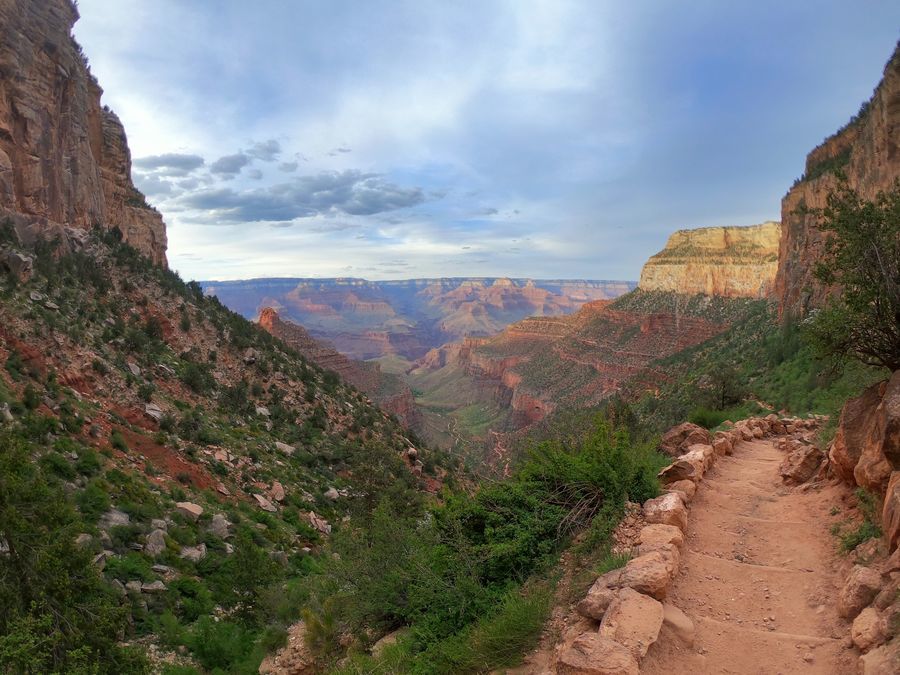
The South Rim serves as the primary and most practical hiking option for the Grand Canyon in November, largely due to its year-round accessibility and relatively more predictable, though still challenging, weather patterns compared to its northern counterpart. Hikers choosing the South Rim must contend with a blend of late-autumn crispness and early-winter chill. Day-to-day fluctuations can be extreme; one might experience mild, sunny skies followed by a sudden snow flurry or a sustained cold snap. Average snowfall for November at the South Rim is typically moderate, but a significant storm can drop several inches, temporarily closing roads and rendering trails icy and hazardous. The key to a successful South Rim hike lies in meticulous weather monitoring and trail condition assessment. For instance, trails like Bright Angel and South Kaibab, while well-maintained, can develop dangerous ice patches, particularly in shaded areas or after an overnight freeze. This necessitates appropriate footwear and traction aids such as microspikes. The primary argument for the South Rim as the default November approach is its superior infrastructure—visitor services remain operational, and ranger presence ensures more reliable information and potential assistance, mitigating some of the inherent risks of winter hiking. However, reliance on these services should not diminish personal preparedness.
North Rim Approach: A Wilderness Challenge (Predominantly Inaccessible)
The North Rim, standing approximately 1,000 feet higher in elevation than the South Rim, presents an entirely different proposition for November hiking—one predominantly characterized by inaccessibility and extreme winter conditions. Historically, the North Rim closes to vehicular traffic by mid-October, or earlier if significant snowfall occurs, and remains closed until mid-May. This closure is not arbitrary; it is a direct consequence of the severe winter weather that routinely blankets the area in deep snow. Average November snowfall on the North Rim can easily exceed several feet, making conventional hiking impossible without specialized winter equipment such as snowshoes or cross-country skis, and extensive backcountry experience. The logical argument against the North Rim as a viable "hiking" approach in November is thus twofold: practical access is generally denied, and the conditions, even if accessed via backcountry permits and arduous travel, far exceed the scope of typical day or overnight hiking. Those contemplating any form of November travel on the North Rim must possess advanced winter wilderness skills, self-sufficiency for multiple days, and be prepared for true expeditionary conditions, including navigating avalanche terrain and extreme cold. Comparing it directly to the South Rim for conventional hiking is a misdirection; the North Rim in November transforms into a formidable winter wilderness, requiring a fundamentally different set of planning and preparation parameters.

Strategic Planning for a Successful November Grand Canyon Excursion
Given the distinct weather profiles and accessibility of the Grand Canyon’s rims in November, a strategic approach to planning is indispensable. For the vast majority of hikers, focusing exclusively on the South Rim is the only pragmatic decision. This involves not only preparing for the immediate weather but also understanding its implications for trail conditions and personal safety. The core principle is adaptability: weather forecasts, particularly those for the inner canyon, should be monitored continuously up to the departure date. Furthermore, developing a contingency plan for rapidly deteriorating conditions is crucial; this might involve shortening a planned route, delaying a start, or even cancelling a trip if a major storm front is imminent. Hydration remains critical, despite cooler temperatures, as the dry desert air and exertion can still lead to dehydration. Proper nutrition is also vital to maintain core body temperature. Equipment choices, as detailed below, must reflect the potential for cold, wet, and icy conditions. The logical culmination of these considerations is a comprehensive plan that prioritizes safety, respects the inherent power of the environment, and leverages available resources like ranger information and trail reports to make informed decisions, ensuring a memorable rather than precarious experience.
- Layered clothing system, including moisture-wicking base layers, insulating mid-layers, and waterproof/windproof outer shells.
- Sturdy, waterproof hiking boots with excellent ankle support and reliable traction, often coupled with gaiters to keep snow out.
- Traction devices such as microspikes or YakTraks, especially for ice-prone sections of popular trails like Bright Angel and South Kaibab.
- Ample water capacity (minimum 3-4 liters per person per day) and a method to prevent freezing, such as insulated sleeves or placing bottles upside down in packs.
- High-energy, non-perishable food to sustain energy levels in colder temperatures.
- Headlamp or flashlight with spare batteries, recognizing shorter daylight hours.
- Map, compass, and GPS device with downloaded offline maps, even on well-marked trails, due to potential whiteout conditions.
- First-aid kit tailored for cold weather injuries and blisters.
- Sun protection (hat, sunglasses, high-SPF sunscreen) as UV radiation remains strong, especially with reflective snow.
- Trekking poles for stability on uneven or icy terrain and to reduce strain on descents.
Common Mistakes to Avoid
- Underestimating the rapid and extreme weather changes that can occur between the rim and the inner canyon, and from day to day.
- Inadequate hydration; cooler temperatures often mask the body’s need for fluids, leading to dehydration.
- Relying solely on rim-level weather forecasts without considering inner canyon conditions, which can be significantly warmer or different.
- Neglecting to check current trail conditions for ice, snow, or closures before and during the hike.
- Packing insufficient layers or failing to bring waterproof/windproof outer gear, leading to hypothermia risk.
- Ignoring the reduced daylight hours, resulting in hiking in the dark, which is inherently more dangerous.
- Attempting the North Rim in November without extensive winter wilderness experience and specialized gear, leading to potential search and rescue situations.
FAQ
Is it safe to hike the Grand Canyon in November?
Yes, hiking in the Grand Canyon in November can be safe and highly rewarding, provided hikers are thoroughly prepared and respect the challenging conditions. The key is meticulous planning, carrying appropriate cold-weather and traction gear, monitoring specific weather and trail conditions, and understanding the significant differences between the accessible South Rim and the largely inaccessible, severe winter environment of the North Rim. Safety is directly correlated with preparedness and conservative decision-making.
What are the key differences between South and North Rim weather in November?
The primary difference stems from elevation. The North Rim, being higher (around 8,000 feet), experiences significantly colder temperatures and much heavier snowfall, leading to its closure to most visitors by mid-October. The South Rim (around 7,000 feet) has milder, though still cold and variable, November weather with less snow, allowing year-round access. Inner canyon temperatures on the South Rim are notably warmer than the rim. This disparity means the South Rim offers conventional hiking opportunities, while the North Rim transforms into an extreme winter wilderness, largely unsuitable for typical hiking.
How should I prepare for sudden weather changes?
Preparing for sudden weather changes in November at the Grand Canyon involves several critical strategies. First, always dress in layers, allowing for quick adjustments to temperature fluctuations. Include moisture-wicking base layers, insulating mid-layers, and a waterproof/windproof outer shell. Second, carry emergency essentials like a headlamp, extra food, and a first-aid kit. Third, continuously monitor multiple weather forecasts, including specific inner canyon predictions, and be prepared to alter or cancel your hike if conditions are unfavorable. Finally, inform someone of your itinerary and expected return time, especially when venturing into the inner canyon.
Verdict and Recommendation: For the vast majority of hikers considering the Grand Canyon in November, the South Rim is not merely an option but the only practical and recommended approach. Its accessibility, relative predictability of challenging conditions (compared to the North Rim), and operational infrastructure make it feasible for prepared individuals. The North Rim, conversely, transforms into a severe winter wilderness, rendering it unsuitable for conventional hiking. Strategic planning for the South Rim must prioritize adaptability to variable temperatures, potential ice and snow, and shorter daylight hours. By meticulously preparing with appropriate gear, monitoring conditions, and exercising prudent judgment, hikers can safely experience the unparalleled beauty of the Grand Canyon in its serene November aspect.