Choosing the Best Scuba Diving Certification
The selection of a scuba diving certification is a pivotal decision for aspiring professionals and serious enthusiasts, directly influencing training quality, global recognition, and career trajectory. This analysis examines leading agencies—PADI, SSI, and NAUI—to provide a comparative framework for informed decision-making within the dynamic global diving industry.
Core Methodologies and Agency Philosophies
The scuba diving certification landscape is shaped by distinct operational philosophies. PADI, the largest global agency, employs a highly standardized, modular curriculum. This ensures consistent training quality and broad global acceptance, appealing to recreational divers seeking universal recognition and predictable educational delivery.
SSI offers a flexible, student-centric model, empowering instructors to adapt course delivery to individual learning styles within international standards. Its “comfort through repetition” principle promotes skill mastery through practice, integrating online resources with practical in-water sessions. This adaptability benefits diverse learners prioritizing personalized instruction and continuous skill development.
NAUI is renowned for its stringent, instructor-led training, emphasizing comprehensive academic understanding and robust practical application. NAUI instructors have considerable autonomy, often exceeding minimum standards to cultivate highly competent, self-reliant divers. This rigorous methodology appeals to military, scientific, and public safety diving, where in-depth knowledge and leadership are paramount. Each agency’s philosophy influences initial training and long-term utility.

Curriculum Structure and Training Standards
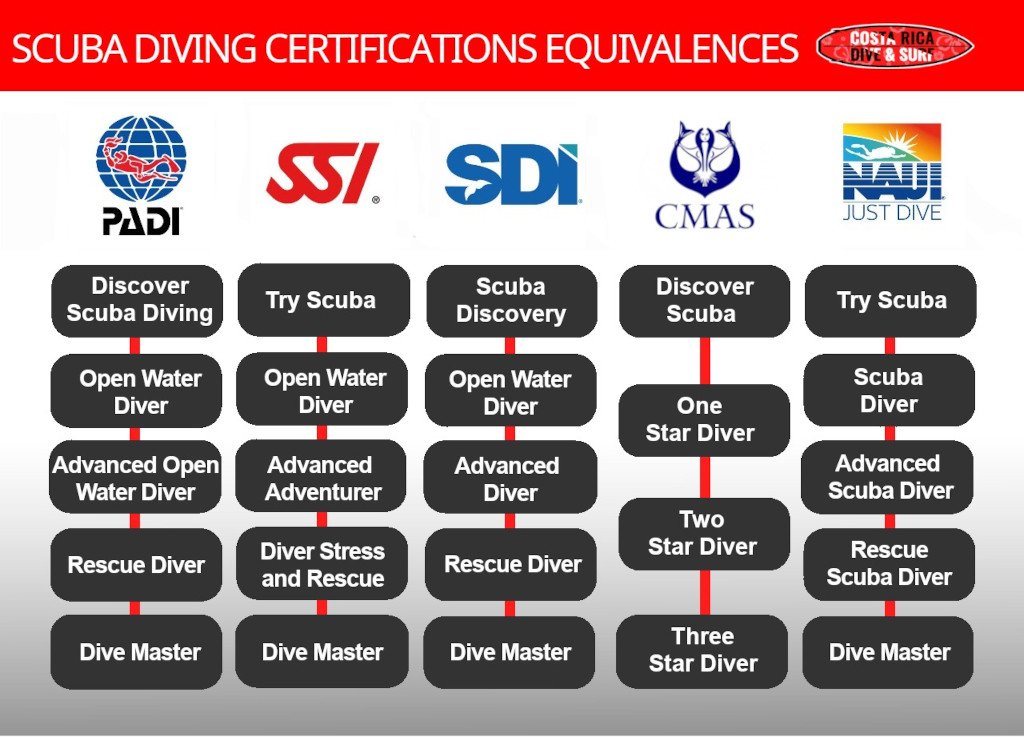
Entry-level Open Water Diver courses across agencies achieve similar certification outcomes but differ significantly in pedagogical execution. PADI’s curriculum is prescriptive, comprising distinct academic modules, confined water skill sessions, and open water training dives. This structured progression guarantees consistent skill demonstration globally, making PADI certifications broadly recognizable for general recreational pursuits and appealing to those preferring a uniform learning path.
SSI’s Open Water program shares similar performance requirements but offers greater delivery flexibility. Students complete online academics at their own pace, and in-water training is adaptable by the instructor, focusing on thorough skill mastery. SSI often mandates logged dives for advanced ratings, integrating practical experience into progression, appealing to those benefiting from a personalized, experience-driven learning curve.
NAUI’s Scuba Diver certification features more extensive classroom theory and in-water components, reflecting its emphasis on in-depth understanding. NAUI instructors often introduce additional skills or scenarios, surpassing minimum standards. This rigorous, instructor-driven training produces highly self-sufficient divers with a deep grasp of dive physics, physiology, and emergency procedures. For professionals needing advanced problem-solving, NAUI’s foundational rigor is a significant advantage.
Global Recognition and Professional Pathways
The global recognition of a diving certification is paramount for professionals and international travelers. PADI holds an undeniable advantage in sheer global presence and brand recognition. Its certifications are almost universally accepted by dive centers and resorts, simplifying logistics for both recreational and professional divers. For entry-level professional roles, PADI offers a clear, extensively utilized pathway, making it a reliable choice for global employment opportunities.
SSI’s global footprint is rapidly expanding, with certifications increasingly accepted worldwide. While perhaps not as omnipresent as PADI, SSI’s commitment to international standards (ISO) ensures broad acceptance for recreational and professional endeavors. SSI offers a comprehensive professional pathway, emphasizing continuous skill development, appealing to those valuing collaborative training and sustained engagement.
NAUI’s recognition, while less pervasive in mainstream recreational markets, is profoundly respected within demanding segments. Its certifications are highly regarded by military, scientific, public safety, and technical diving organizations where self-reliance, advanced problem-solving, and deep theoretical understanding are paramount. Many seasoned dive professionals hold NAUI certifications due to its reputation for producing exceptionally competent divers. For careers demanding high-level technical proficiency, NAUI offers a compelling credential.
| Criterion | PADI (Professional Association of Diving Instructors) | SSI (Scuba Schools International) | NAUI (National Association of Underwater Instructors) |
|---|---|---|---|
| Global Reach | Largest global presence; universally recognized for recreational diving. | Rapidly expanding; strong recognition. ISO-certified. | Respected; strong in specialized, technical, and North American sectors. |
| Training Philosophy | Standardized, modular, performance-based. Consistent global delivery. | Flexible, student-centric, comfort through repetition. Blends online/in-water. | Rigorous, instructor-led, in-depth. Emphasizes self-reliance and leadership. |
| Curriculum Structure | Prescriptive: fixed academic, confined, open water dives. | Adaptive: self-paced online, tailored in-water. Experience-based. | Comprehensive: extensive classroom/in-water. Instructors often exceed minimums. |
| Professional Pathways | Clear, globally available ladder (Divemaster, Instructor). Global employment. | Comprehensive pathway (Dive Guide, Instructor). Growing network. | Robust pathway, highly valued in scientific, public safety, technical diving. |
| Key Strength | Unmatched global accessibility and brand recognition for recreation. | Flexibility, personalized learning, and integrated digital resources. | In-depth competence, self-reliance, and specialized leadership skills. |
Practical Considerations for Certification Selection
- Assess Your Learning Style: Choose an agency whose methodology aligns with how you best acquire new skills—structured (PADI), flexible (SSI), or rigorous instructor-led (NAUI).
- Identify Your Dive Objectives: For recreational travel, PADI offers ubiquitous recognition. For specialized careers (scientific, technical), NAUI’s in-depth training is highly valued. SSI provides a strong pathway for both, with increasing global acceptance.
- Research Local Dive Centers and Instructors: Instructor quality often surpasses agency affiliation. Investigate reputations, read reviews, and ideally, meet potential instructors to ensure a good fit.
- Consider Future Progression: While cross-over options exist, aligning with an agency’s system streamlines advanced or specialty training. Review offerings and prerequisites for long-term goals.
- Evaluate Cost and Inclusions: Compare package details (materials, gear rental, dive count) beyond just the price. Comprehensive training and safety standards should outweigh minimal cost savings.
- Verify ISO Certification: Confirm the chosen agency adheres to ISO standards for recreational diving services, providing an additional layer of quality assurance and global recognition.
Verdict and Recommendation
The “best” scuba diving certification is highly contingent upon individual objectives and learning preferences. For most recreational divers and those seeking broad global employment in mainstream resort settings, PADI remains the most practical and widely recognized choice, simplifying travel and initial professional entry.
For individuals prioritizing a flexible, student-centric learning pace and continuous experience building, SSI offers a compelling alternative. Its growing global recognition, robust online platform, and adaptable methodology cater well to personalized skill development and internationally recognized credentials.
Conversely, for professionals or enthusiasts demanding rigorous, in-depth academic foundations, enhanced self-reliance, and aiming for specialized roles (e.g., scientific, public safety, technical diving), NAUI stands as a superior choice. Its reputation for cultivating highly competent, leadership-capable divers, amplified by instructor autonomy, provides a thorough educational experience.
Ultimately, while all three agencies adhere to international safety standards, optimal selection requires critical alignment of agency philosophy with one’s personal learning style and long-term professional trajectory. Professionals must carefully weigh global recognition against specialized credibility.