Accelerate Mortgage Payoff: How Extra Principal Saves You Money
With over 15 years in finance, I’ve observed the profound impact of strategic mortgage management. Paying extra principal is a powerful, yet often misunderstood, strategy. While it doesn’t typically reduce your immediate monthly payment, it significantly cuts total interest and shortens your loan term, changing your financial future.
The Mechanics: How Extra Principal Works
Understanding mortgage amortization is crucial. Early in a 30-year loan, most of your payment covers interest, with a small portion reducing principal. On a $300,000 loan at 6%, your initial $1,798.65 payment has about $1,500 in interest. An extra principal payment directly reduces the outstanding balance, lowering future interest calculations. This saves money immediately. I guided a young couple, Sarah and Tom, who used consistent small extra payments to significantly reduce total interest and shorten their loan by years. Ensure these funds are specifically applied to principal, not held as prepayment.
Common Misconceptions & Beginner Mistakes
A primary misconception is that extra principal payments instantly lower your scheduled monthly mortgage payment. This is generally incorrect; your contractual payment remains fixed. The true benefit is a shorter loan term and substantial reduction in total interest paid over time – a long-term gain, not an immediate change to your bill.

Overpaying without clear instructions is another mistake. Lenders might hold extra funds in a “suspense” account, applying them to your next standard payment, which doesn’t accelerate principal reduction. Always specify to your lender (in writing or online) that additional funds are for direct principal application.
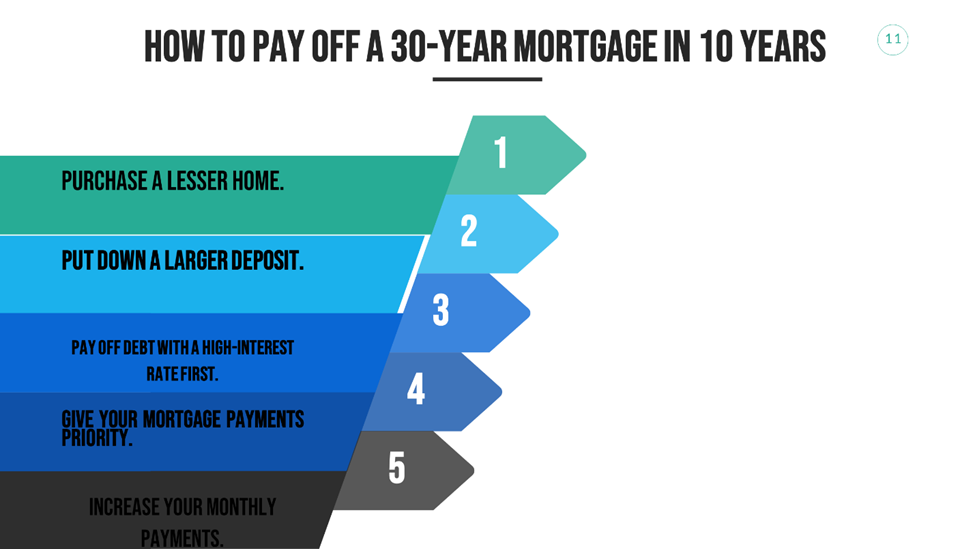
Prioritizing extra mortgage principal over higher-interest debts is a common misstep. While a 6% mortgage reduction yields a risk-free 6% return, credit card debt at 18-24% or personal loans at 10-15% offer a far greater financial advantage when paid down first. Always tackle the highest interest rate debt first to maximize savings.
The Tangible Benefits: Saving Thousands & Building Equity
The numbers are compelling. On a $300,000, 30-year mortgage at 6%, total interest is about $347,514. Committing an extra $100 monthly towards principal drops total interest to around $299,578, cutting the loan term to roughly 26.5 years. That’s nearly $48,000 saved and 3.5 years off your mortgage! Larger consistent payments or lump sums magnify these savings.
This strategy also dramatically accelerates equity build-up. A lower principal balance means faster home ownership, providing a stronger financial buffer and opening doors for future goals. I advised a client to apply a $10,000 work bonus directly to their principal. Seeing their payoff date move forward by nearly a year, and the substantial interest savings, reinforced it as a wise financial move.
Below is a comparison of principal payment strategies on a typical mortgage ($300,000 loan, 6% interest, 30 years, standard payment $1,798.65).
| Scenario | Total Monthly Outlay | Total Interest Paid (Approx.) | Loan Term (Years) | Total Savings (vs. Standard) |
|---|---|---|---|---|
| Standard 30-Year Mortgage | $1,798.65 | $347,514 | 30 | $0 |
| Add $100/month to Principal | $1,898.65 | $299,578 | 26.5 | $47,936 |
| Add $300/month to Principal | $2,098.65 | $242,525 | 22.8 | $104,989 |
| $5,000 One-Time Principal Payment (at Year 1) | $1,798.65 + $5,000 once | $331,100 | 29.0 | $16,414 |
Pro Tips for Maximizing Your Mortgage Savings
- Automate & Designate: Set up an automatic transfer for extra principal payments, explicitly instructing your lender on fund application. Always confirm these instructions have been followed to ensure direct principal reduction.
- Strategic Allocation: Before making extra mortgage principal payments, ensure you have a robust emergency fund (3-6 months of expenses) and no high-interest debt (e.g., credit cards, personal loans). Prioritize eliminating those higher-cost debts first for optimal financial health.
- Leverage Windfalls: Use annual bonuses, tax refunds, or unexpected inheritances for lump-sum principal payments. Even a few thousand dollars can shave months, or years, off your loan term and save significant interest, accelerating your path to debt-free homeownership.