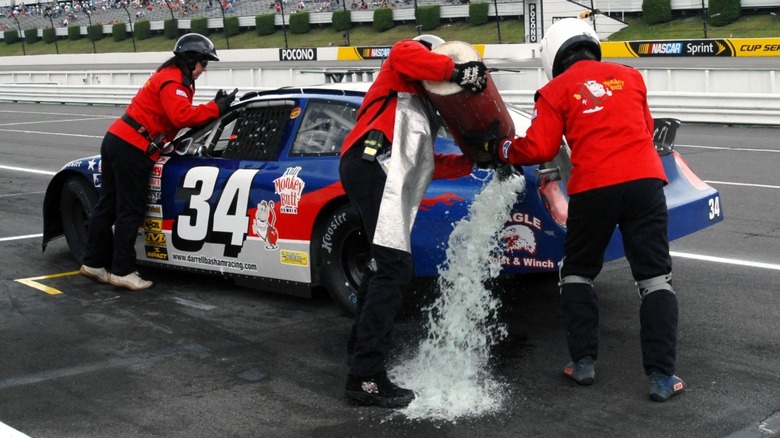
Overlooking Fuel Management: Critical Mistakes in Race Operations
In the high-stakes environment of motorsport, every fraction of a second and every drop of fuel can determine victory or defeat. A sophisticated fuel management system (FMS) for race cars is a strategic imperative that directly impacts performance consistency, operational efficiency, and long-term team viability. This analysis guides decision-makers through overlooked risks and significant opportunities, emphasizing a robust ROI-driven perspective for optimal strategic investment.
Beyond the Basics: The Strategic Imperative of Race Car Fuel Management
At its core, a fuel management system (FMS) in a race car precisely controls fuel delivery to the engine, built for extreme conditions, demanding accuracy, rapid response, and extensive data logging. From a strategic standpoint, an FMS is an investment in performance predictability and competitive advantage, enabling granular control to optimize engine power, ensure regulatory compliance, and empower strategists with real-time data for critical decisions. Overlooking this strategic depth is a fundamental error, leading to performance inefficiencies and operational liabilities.
Critical Missteps: The Cost of Inadequate Fuel System Oversight
Ignoring sophisticated fuel management leads to significant performance and financial repercussions. A primary mistake is underestimating the impact of inconsistent fuel pressure or flow. This causes lean or rich mixtures, resulting in engine damage, power loss, and excessive consumption, directly increasing maintenance costs and reducing lap times. Secondly, failing to integrate comprehensive fuel data logging with overall telemetry leaves teams operating in a data vacuum. Without real-time and post-race data on pressure, temperature, and consumption, strategic tuning and pit planning become guesswork, hindering data-driven decisions on fuel load and power delivery. Lastly, neglecting crucial elements like fuel slosh mitigation and regular maintenance of injectors and pumps introduces severe inconsistencies. Fuel starvation during high G-forces can cause critical engine disruptions, while worn components lead to unpredictable engine behavior. These are not mere technical glitches; they are strategic oversights that directly erode a team’s competitive edge and financial health.

Evaluating Your Options: A Framework for Strategic Investment
Deciding on a fuel management system requires moving beyond feature comparison to a comprehensive ROI analysis. Teams, whether small or large, must evaluate solutions based on quantifiable improvements: faster lap times, reduced operational costs via better fuel economy and engine longevity, and enhanced strategic flexibility. A crucial framework involves assessing the total cost of ownership, including initial purchase, installation, and ongoing calibration, maintenance, and integration. Risk assessment must identify potential points of failure, operational complexity, and support availability. A highly complex system might offer unparalleled precision but demand specialized personnel and a steeper learning curve. The decision-maker must weigh these gains against operational complexities and resource needs. Phased implementation or modular upgrades can allow for incremental investment. The chosen FMS must align with the team’s competitive objectives, budget, and technical capabilities, transforming a technical choice into a strategic business decision.
| Feature/Option | OEM-Derived ECU (Basic) | Aftermarket Standalone ECU (Advanced) | Dedicated Motorsport FMS (Pro-Grade) |
|---|---|---|---|
| Initial Cost | Low to Moderate | Moderate to High | High |
| Fuel Control Precision | Good for mild applications, limited race optimization. | Very good, extensive mapping for diverse race conditions. | Exceptional, real-time adaptive control, ultimate precision. |
| Data Logging & Telemetry | Basic engine parameters; limited fuel-specific data. | Comprehensive engine and fuel data; often expandable. | Extensive, high-resolution, fuel-specific data; seamless integration. |
| Customization & Expandability | Limited; primarily via re-flashing. | Extensive; supports various sensors, injectors, strategies. | Maximum; modular design for bespoke sensors, flow meters, pressure regulators. |
| Risk Profile (Complexity/Support) | Lower operational complexity, but higher risk of suboptimal race performance. | Moderate complexity; requires skilled tuners. Robust systems generally reliable. | Higher initial setup complexity; expert knowledge required, but highly reliable post-configuration. |
| Ideal Scenario | Entry-level amateur racing, budget-conscious teams, lightly modified cars. | Serious amateur to semi-professional teams, highly modified cars, diverse race series. | Professional factory teams, top-tier motorsport, seeking every competitive edge, high budget. |
Mitigating Risk and Maximizing Return: Implementing Best Practices
- Conduct a Thorough Needs Assessment: Clearly define your team’s specific requirements, budget, and competitive goals before investing.
- Prioritize Integration Capability: Ensure any new FMS seamlessly integrates with existing ECUs, data loggers, and telemetry to avoid data silos.
- Invest in Training and Expertise: Budget for specialized training for engineers and tuners to fully leverage sophisticated FMS capabilities.
- Establish a Robust Maintenance Schedule: Regular calibration, cleaning, and inspection of injectors, pumps, sensors, and lines are crucial for accuracy and preventing failures.
- Leverage Data for Continuous Improvement: Actively analyze FMS data to refine fuel maps, optimize pit strategies, and inform driver coaching.
- Consider Scalability and Future-Proofing: Choose a system that can evolve with team growth and adapt to rule changes or engine advancements.
- Perform Rigorous Validation: Always conduct thorough bench testing and track validation for new FMS or significant changes to confirm performance and reliability.